
How Interpersonal Skills Animation Makes Workplace Training Stick

How Interpersonal Skills Animation Makes Workplace Training Stick
Interpersonal skills animation is the use of animated characters, scenes, and scenarios to teach communication, empathy, teamwork, feedback, and conflict resolution. By turning human interactions into visual stories, it helps learners notice tone, body language, choices, and consequences faster than static slides or text-heavy training.
Teaching interpersonal skills has always been tricky. Unlike technical tasks, good communication is rarely just a checklist. It includes timing, listening, emotional control, word choice, and nonverbal behavior. Those details are easy to describe in theory but much harder to demonstrate consistently across teams.
That is why interpersonal skills animation has become such a practical learning tool. It gives trainers, HR leaders, managers, and educators a controlled way to show realistic conversations without the cost, awkwardness, or inconsistency of live role-play every time. A short animated scenario can show a difficult feedback conversation, a customer complaint, or a team conflict in a way that feels safe, memorable, and repeatable.
What Is Interpersonal Skills Animation?
At its core, interpersonal skills animation is animated learning content designed to improve how people relate to others. Instead of teaching only facts, it teaches behavior: how to listen, how to respond, how to ask questions, how to de-escalate tension, and how to work with different personality styles.
A simple explanation
Think of it as a visual rehearsal space for human interaction. Learners watch animated characters move through real workplace situations, such as:
- a manager giving constructive feedback
- a new hire asking for help
- a sales rep handling resistance
- a teammate interrupting others in a meeting
- a supervisor addressing conflict between colleagues
Because the scene is animated, the learning designer can control every element: pacing, camera angle, facial expression, silence, and outcome. That makes subtle communication patterns easier to highlight.
What learners actually see
Good interpersonal skills animation usually includes:
- Characters with relatable roles and emotions
- Scenarios based on realistic workplace moments
- Visual cues like posture, eye contact, space, and reaction
- Choice points in interactive versions
- Feedback that explains why one response works better than another
For example, an animated scene might show a team lead saying, “Do you have a minute?” while standing over a seated employee with crossed arms. Even before the words matter, learners can see the power dynamic and tension. That visual clarity is one reason animation works so well for interpersonal development.
How it differs from ordinary training videos
Live-action videos can also teach soft skills, but animation offers some unique advantages:
| Format | Best for | Limitation |
|---|---|---|
| Live-action video | realism, emotional nuance | costly to update or localize |
| Static slide deck | quick information delivery | weak for behavior modeling |
| Written case study | reflection and discussion | hard to show tone and nonverbal signals |
| Interpersonal skills animation | repeatable behavior modeling, scalable practice, safe emotional distance | requires thoughtful scripting to feel authentic |
Animation is especially useful when you need consistency. Every learner sees the same conversation, the same pause, the same mistake, and the same consequence.
Why Is Interpersonal Skills Animation Important?
Interpersonal skills animation is important because interpersonal mistakes are expensive. Poor listening can derail a project. Weak feedback can reduce performance. Mishandled conflict can damage trust. And in customer-facing roles, one tense interaction can affect revenue, retention, or reputation.
Soft skills are hard to teach with text alone
Most people understand soft skills in principle. They know they should listen actively, show empathy, and communicate clearly. The challenge is seeing what those behaviors look like in real time.
A slide may say, “Use open-ended questions.” But an animated scene can show the difference between:
- “Why didn’t you finish this?”
and - “What obstacles came up, and how can I help?”
That difference feels obvious once it is dramatized. Animation turns abstract advice into visible action.
It makes invisible behavior visible
One of the most powerful aspects of animation is that it can slow down and isolate moments that humans usually miss.
For example, a short scene can emphasize:
- a defensive facial expression
- a pause before replying
- an employee looking away when uncomfortable
- a rushed tone that sounds dismissive
- the shift in mood after one empathetic sentence
In real life, those moments pass quickly. In animated learning, they can be replayed, compared, and discussed.
It creates safer learning environments
Not every learner wants to practice sensitive interpersonal situations in front of coworkers. Topics like bias, conflict, burnout, exclusion, or difficult feedback can feel personal. Animation adds just enough distance to reduce embarrassment while still keeping the situation emotionally recognizable.
That is especially valuable in global organizations, where employees may have different comfort levels around public role-play.
It supports broader training ecosystems
Interpersonal skills animation works even better when it is part of a larger learning system. For a deeper look at immersive practice beyond video modules, see our guide on Article about simulation leadership training. Simulations and animation often complement each other: animation introduces the behavior clearly, while simulations let learners practice making decisions under pressure.
The Most Powerful Formats and Real-World Examples
Not all interpersonal skills animation looks the same. The strongest programs match the format to the behavior being taught.
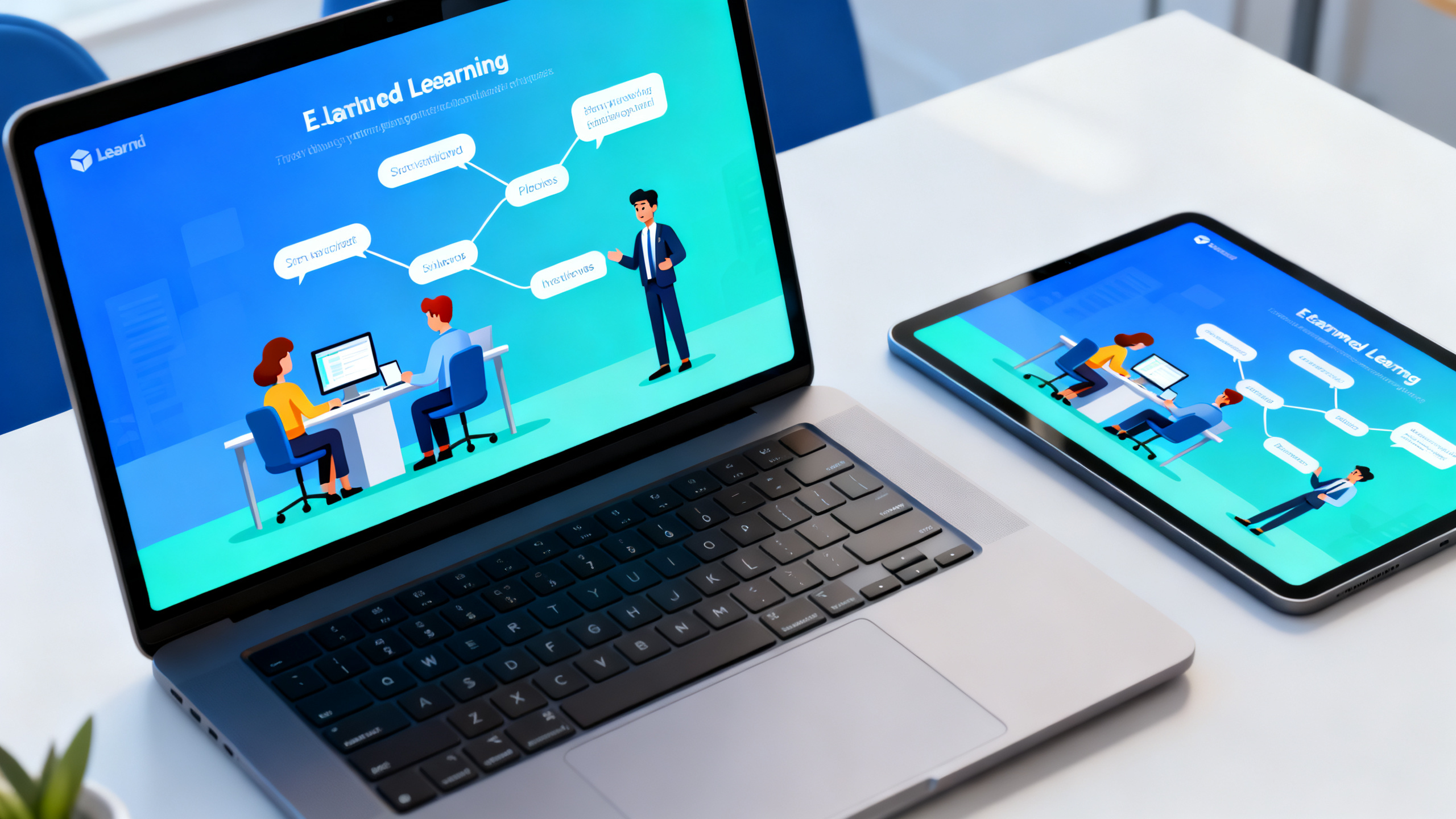
1. Microlearning animations
These are usually 60 seconds to 3 minutes long and focus on one behavior at a time.
Best for:
- active listening
- giving praise
- running meetings
- handling interruptions
- improving email tone
Example:
A 90-second clip shows a project manager cutting people off during a virtual meeting. The animation then rewinds and shows a better version, where the manager pauses, invites quieter team members in, and summarizes decisions.
2. Branching scenario animation
This interactive format lets learners choose how a character responds. Each choice leads to a different reaction and outcome.
Best for:
- conflict resolution
- coaching conversations
- customer service recovery
- performance feedback
- negotiation
Example:
A supervisor needs to address repeated lateness. Learners choose whether the supervisor starts with accusation, curiosity, or avoidance. The scenario then shows how each style affects trust, honesty, and accountability.
3. Explainer-style animation
These videos simplify concepts such as emotional intelligence, psychological safety, or communication styles.
Best for:
- onboarding
- pre-work before workshops
- shared language across teams
- leadership development foundations
Example:
An animated explainer shows how assumptions form during stressful interactions and why reflective listening helps reduce misunderstandings.
4. Animated case studies
These are story-driven and closer to mini-dramas than quick lessons.
Best for:
- ethics and inclusion
- cross-functional teamwork
- cross-cultural communication
- leadership presence
Example:
A longer animated story follows a product launch team through missed handoffs, unclear expectations, and rising frustration. Viewers analyze where communication broke down and how a better approach could have changed the result.
5. Coaching overlays and visual cues
Some advanced modules visually highlight things like tone shifts, interruptions, or emotional escalation using subtle visual emphasis.
Best for:
- manager training
- call center coaching
- healthcare communication
- frontline supervision
This format is powerful because it helps learners notice patterns they would otherwise overlook.
How to Create and Use Interpersonal Skills Animation
If you are wondering, “How to interpersonal skills animation?” the practical answer is this: identify a real communication challenge, script it honestly, animate the human behavior clearly, and embed it into a learning experience with reflection and practice.
1. Start with one business problem
Do not begin with “we need soft-skills content.” Start with a real issue:
- managers avoid difficult feedback
- new hires struggle to ask clarifying questions
- customer service agents escalate tense calls
- remote teams misread tone in async communication
- cross-functional groups hold inefficient meetings
A narrow target leads to stronger animation. “Improve empathy” is too broad. “Help team leads respond better when employees share blockers” is much better.
2. Capture real conversations
The best scripts come from reality, not theory alone. Interview managers, high performers, HR partners, and frontline staff. Ask:
- What exact phrases do people use?
- Where does the conversation go wrong?
- What does the other person usually feel?
- What would a stronger response sound like?
- What nonverbal signals matter most?
This step prevents the animation from sounding fake or overly polished.
3. Build scenes around behavior, not slogans
A common mistake is filling animated content with generic advice. Learners do not need more slogans like “communicate better.” They need scenes that show:
- what bad communication looks like
- why it creates friction
- what improved behavior sounds and looks like
- what result follows from the better choice
A useful structure is:
- Show the challenge
- Pause at the key decision point
- Show one poor response and the consequences
- Show one stronger response and the difference
- Summarize the practical takeaway
4. Design believable characters and body language
In interpersonal learning, visuals matter. If characters are too stiff, exaggerated, or childish, adults disengage.
Strong design choices include:
- realistic workplace clothing and settings
- subtle facial expressions
- natural pauses and gestures
- culturally inclusive character design
- age and role diversity
For example, a manager who leans in too aggressively or keeps glancing at a laptop during a one-on-one sends a message before speaking. Good animation captures that.
5. Keep modules short and focused
Most workplace learners do better with small, scenario-based lessons than long lecture-style videos. A practical range is:
- 1-3 minutes for one concept
- 3-7 minutes for one scenario plus reflection
- 10-15 minutes for a branching practice activity
Shorter modules are easier to update, easier to assign, and more likely to be completed.
6. Add reflection and practice
Watching is useful, but behavior changes when learners apply what they saw. After the animation, include prompts such as:
- What did the character do that raised tension?
- Which phrase showed empathy without lowering standards?
- What would you say in your team’s context?
- Where have you seen this pattern at work?
To reinforce those skills in live settings, pair your modules with small-group exercises or follow-up activities. If you want simple ways to extend learning after the animation, our guide on Article about quick team building games online offers practical formats that help teams practice communication and trust in a low-pressure way.
7. Measure behavior, not just clicks
Completion rates and quiz scores are helpful, but interpersonal skills training should also connect to workplace behavior.
Useful indicators include:
- manager observation checklists
- peer feedback trends
- customer satisfaction scores
- escalation rates
- employee engagement comments
- time to proficiency for new hires
If you want a clearer picture of how communication patterns affect team performance over time, tools like Team Dynamics Hub can support measurement beyond course completion.
When Should I Use Interpersonal Skills Animation?
Interpersonal skills animation is most useful when you need clear, repeatable demonstration of behavior and when live role-play alone is too inconsistent, too costly, or too uncomfortable.
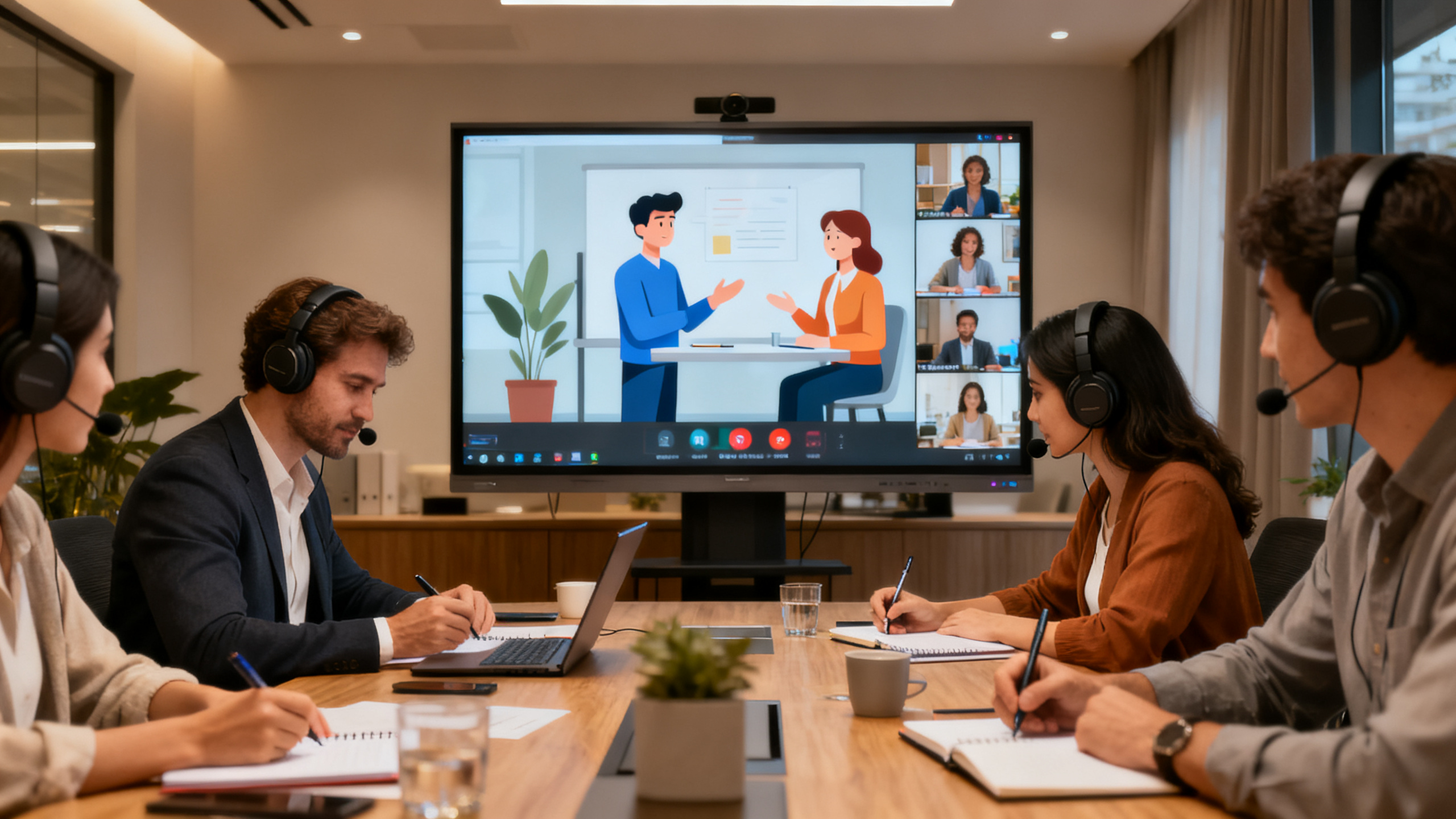
During onboarding
New hires often understand job tasks before they understand the social norms of the organization. Animation can show:
- how to ask for help
- how meetings are run
- how feedback is usually given
- how to communicate across departments
- what respectful collaboration looks like
That gives new employees a clearer picture of expected behavior without overwhelming them.
Before manager training
Many first-time managers struggle with conversations more than strategy. They need to learn how to:
- set expectations
- handle underperformance
- coach without micromanaging
- recognize good work
- navigate conflict between team members
Animation lets them preview these moments before practicing live.
In remote or hybrid teams
Distributed teams lose many in-person cues. Tone is easier to misread, silence is harder to interpret, and conflict may simmer unnoticed. Animated scenarios help teams examine moments that commonly create friction in digital work:
- abrupt chat messages
- meeting dominance
- camera-off disengagement
- missed handoffs
- unclear ownership
For sensitive topics
Use interpersonal skills animation when the subject is emotionally charged or socially complex, such as:
- inclusive communication
- bias in meetings
- burnout conversations
- harassment prevention
- customer complaints
- clinical or care-related communication
Animation creates emotional safety while still showing consequences clearly.
For global and multilingual audiences
Because animation is easier to localize than live-action reshoots, it works well across regions. Voiceovers, subtitles, pacing, character design, and examples can be adapted more efficiently, making it easier to standardize core interpersonal skills across a large workforce.
What Are the Benefits of Interpersonal Skills Animation?
The benefits of interpersonal skills animation go far beyond “making training more engaging.” When designed well, it improves comprehension, consistency, retention, and application.
Benefits for learners
Faster understanding
Animation shows what good and bad communication actually looks like. Learners do not have to imagine the scenario from text.
Better memory
People remember stories and scenes more easily than abstract advice. A short animated conflict scene can stay with a learner longer than a list of dos and don’ts.
Lower social pressure
Not everyone learns well by immediately role-playing in front of peers. Animation creates a lower-risk entry point.
More inclusive access
Animation can be adapted with captions, voiceovers, pacing choices, and localization, making interpersonal skills training more accessible to broader audiences.
Benefits for trainers and L&D teams
Consistency at scale
Every learner receives the same core message, examples, and model behavior. That is difficult to achieve through live facilitation alone.
Easier updates
If policy, process, or language changes, animated assets are often easier to revise than live-action footage.
Better blending with other formats
Animation works well before workshops, after workshops, inside LMS modules, in onboarding sequences, or as manager refreshers.
Clearer focus
Because animated modules are often short, they force instructional designers to focus on one behavior at a time instead of stuffing everything into one course.
Benefits for the organization
Stronger communication culture
Repeated exposure to modeled behaviors helps teams develop shared expectations around feedback, listening, and collaboration.
Reduced avoidable conflict
When employees see what triggers defensiveness or confusion, they are more likely to catch those habits in themselves.
Improved customer and employee experience
Better conversations improve internal trust and external service quality.
More efficient training investment
Once built, a good animation module can be reused across locations, cohorts, and learning paths.
A practical summary of the benefits
Here are the biggest business-level advantages in one view:
| Benefit | What it improves |
|---|---|
| Visual clarity | understanding of nuanced communication |
| Scalability | consistent training across teams |
| Safety | learning on sensitive topics without high pressure |
| Retention | recall of key behaviors and consequences |
| Efficiency | reusable training content with lower long-term cost |
| Reinforcement | easier pairing with workshops, coaching, and simulations |
Best Practices and Common Mistakes
Interpersonal skills animation can be powerful, but only if it feels credible and relevant.
Best practice: use realistic dialogue
Employees instantly detect scripted corporate language. Instead of writing idealized conversations, write imperfect, believable ones. People hesitate, interrupt, soften, over-explain, and miss cues. That realism is what makes the lesson useful.
Best practice: show consequences, not just advice
Do not stop at “here is the right behavior.” Show what happens next:
- the employee opens up
- the customer calms down
- the teammate becomes more defensive
- the meeting ends with clarity instead of confusion
Consequences make the lesson stick.
Best practice: keep the visual style professional
Animation for adults should feel polished, not childish. The tone can be friendly, but it should still reflect workplace reality. Clean motion, credible environments, and restrained expressions usually work better than exaggerated cartoon energy.
Best practice: blend animation with human discussion
Animation is excellent for demonstration, but discussion and practice are still necessary for mastery. Use managers, facilitators, coaches, or peer groups to help learners translate the scenario into daily behavior.
Common mistake: making it too generic
If the lesson could apply equally to every job in every company, it may not feel actionable. Add context:
- frontline healthcare
- customer support
- project management
- leadership communication
- hybrid teamwork
- cross-cultural collaboration
Specificity increases transfer.
Common mistake: treating it as entertainment only
Good animation is engaging, but engagement is not the final goal. The objective is behavior change. That means every scene should connect to a real decision, a real risk, or a real performance gap.
Common mistake: skipping reinforcement
Learners may enjoy the animation and still return to old habits if nothing reinforces the content afterward. Build a follow-up plan:
- manager prompts
- peer discussion
- short quizzes
- coaching check-ins
- team retrospectives
- observation rubrics
Conclusion: Next Steps for Better Soft-Skills Training
Interpersonal skills animation is more than a visual upgrade to traditional training. It is a practical way to teach human behavior with clarity, consistency, and emotional safety. By showing realistic workplace interactions, it helps people learn not just what to say, but how, when, and why to say it.
If you are considering it for your organization, start small:
- Pick one high-impact communication challenge.
- Script one realistic scenario around that challenge.
- Keep the animation short and behavior-focused.
- Add reflection questions or practice opportunities.
- Track whether the skill improves on the job.
Used well, interpersonal skills animation can strengthen onboarding, leadership development, team collaboration, customer interactions, and conflict management. And if you want to connect those learning efforts to broader team performance, explore Team Dynamics Hub as a next step for understanding how communication patterns show up in real team dynamics.
In short: if your goal is to help people learn interpersonal skills in a way that is memorable, scalable, and actually useful at work, animation is one of the most effective formats available today.