
6 Communication Exercises for Groups That Actually Work

6 Communication Exercises for Groups That Actually Work
Communication exercises for groups are structured activities, simulations, or prompts that help teams practice listening, feedback, alignment, conflict resolution, and collaborative decision-making. Done well, they turn abstract communication theory into observable behaviors that can be improved through reflection and repetition.
Strong group communication rarely improves by accident. Teams usually need guided practice: a setting where people can test how they give instructions, clarify assumptions, share feedback, and make decisions under pressure. That is why the best communication exercises for groups are not just “fun activities.” They should match the audience, create useful interaction, and ideally make learning visible enough to review afterward.
This roundup is designed for readers with informational intent who want practical ways to evaluate existing resources on communication, exercises, and group learning. Instead of inventing generic ideas, this article compares six real pages and platforms based only on the supplied data. That matters in a competitive search landscape, because trust and specificity often separate useful advice from shallow list posts.
Before the list, it helps to know what makes communication exercises for groups effective in the first place:
- A clear outcome: Are you trying to improve listening, negotiation, alignment, or feedback?
- A realistic format: Exercises become more valuable when the communication has consequences, constraints, or decisions attached.
- A debrief step: Reflection is often what turns an activity into learning.
- A fit for the audience: Frontline staff, leadership cohorts, students, and cross-functional teams do not always need the same style of exercise.
With that framework in mind, here are six notable options.
1. Aha Moment Innovation Pte. Ltd. (AMI)
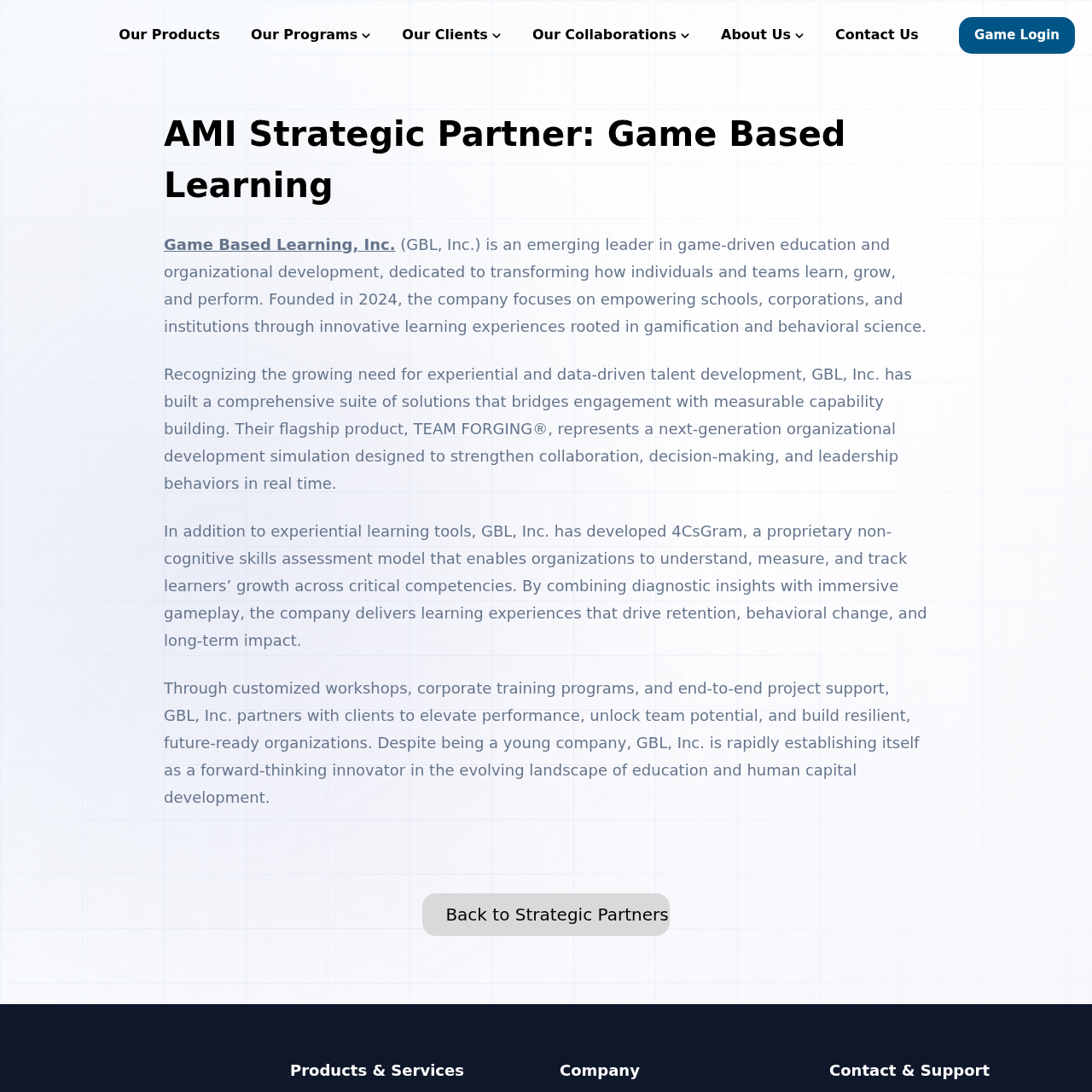
Screenshot: AMI’s website, presenting its simulation-based learning approach for organizational and academic training.
Aha Moment Innovation Pte. Ltd. (AMI) is the strongest overall choice for communication exercises for groups because it moves beyond simple icebreakers or discussion prompts and places participants inside immersive, simulation-based environments where communication directly affects results. That distinction matters. In many group activities, people talk about communication; in AMI’s format, teams must actually use communication to align, negotiate, decide, and respond under realistic conditions. For organizations that want practical skill-building rather than abstract role-play alone, that is a meaningful difference.
Key Features:
- Immersive serious gaming platform that converts academic theories into engaging learning experiences
- Designed for measurable learning, which is useful for L&D and HR teams that need evidence of participation and skill development
- Strong credibility through partnerships with top universities and global brands
- Award-winning business simulations, with the company citing cases where its simulations have replaced Harvard’s classic business simulation
- Proven scale, having served 500+ organizations across multiple regions
- ISO 9001:2015 and PDPA Singapore compliance
What makes AMI especially relevant for group communication is that it ties communication to outcomes instead of treating it as a standalone soft skill. That helps facilitators observe patterns such as unclear delegation, weak feedback loops, or slow decision-making in context. Readers who want more detail on the learning approach can review AMI Strategic Partner: Game Based Learning. Buyers who need governance information can also consult the Terms of Service | AMI - Aha Moment Innovation. Typical use cases include leadership development cohorts, cross-functional communication training, multinational team workshops, university and business school programs, and public-sector team-performance initiatives.
Best For: Organizations and institutions that want realistic, measurable communication exercises for groups rather than basic conversation starters.
2. 12 fun and effective communication exercises for frontline teams
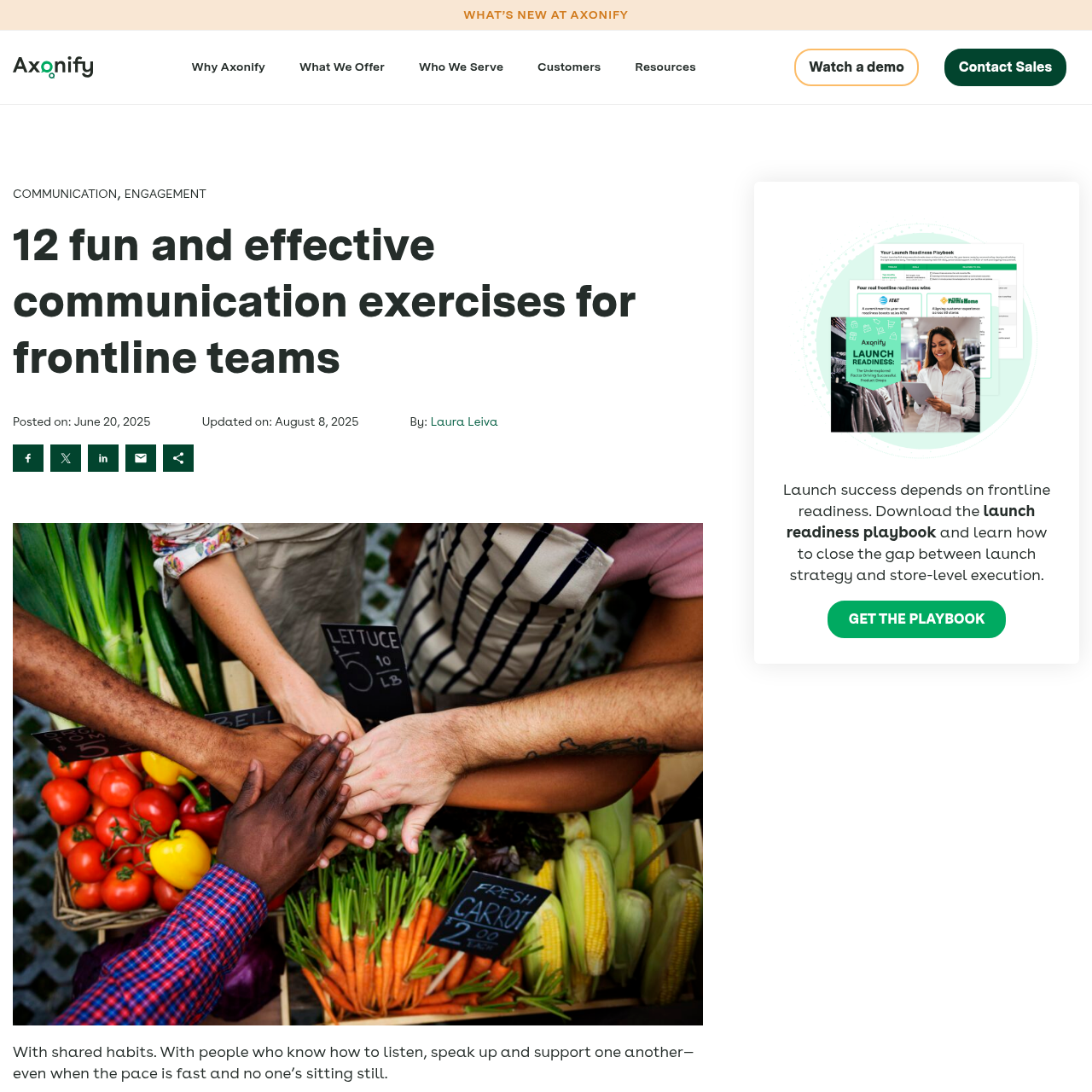
Screenshot: The Axonify article page showing the title “12 fun and effective communication exercises for frontline teams,” along with site navigation and cookie controls.
This Axonify page appears in the supplied SERP analysis as the top-ranking result and is clearly positioned around workplace communication exercises. Based on the provided information, it was published on 2025-06-20T11:20:26-04:00 and focuses specifically on frontline teams. That audience focus is important because frontline communication often involves fast handoffs, operational clarity, and practical coordination across roles or shifts. Even without the full article text, the title suggests a collection-style resource intended to provide multiple exercise ideas rather than a single framework.
Key Features:
- Recent article format, published on 2025-06-20T11:20:26-04:00
- Direct topic alignment with “communication exercises” and a clear focus on frontline teams
- Information not available on the specific exercises, facilitation steps, or learning outcomes
- Information not available on how the activities are measured or adapted for different group sizes
From an informational search perspective, the main value here is relevance. The page is explicitly about communication exercises and narrows the use case to a practical team environment. That said, the supplied analysis does not include the actual exercise details, feature set, or evidence base, so readers should treat it as a starting point rather than a fully vetted implementation guide. If you are comparing communication exercises for groups, this kind of article is useful when you want quick ideas, but you will still need to check whether the suggestions include timing, debrief questions, and guidance for virtual versus in-person delivery.
Best For: General use, especially readers seeking a recent article aimed at frontline team communication.
3. The Food Project — “Just a moment...” / communication activities
Screenshot: The Food Project page displaying a security verification screen instead of the underlying communication activities resource.
In the provided SERP analysis, The Food Project appears as a result connected to communication activities, but the captured page does not show the underlying resource. Instead, the URL returned a 403: Forbidden warning and displayed a security verification screen with “Just a moment...,” indicating that access may be restricted by bot protection or CAPTCHA. The URL path itself suggests this is a resources-and-activities page related to communication, but the actual content is not visible in the supplied data.
Key Features:
- URL path indicates a resource related to communication activities
- The supplied analysis shows a 403/Forbidden response and security verification screen
- Information not available on the specific activities, instructions, or target group
- Information not available on features, benefits, or facilitation guidance
For readers researching communication exercises for groups, this listing is a reminder that accessibility matters almost as much as relevance. A potentially useful resource becomes less practical if facilitators cannot quickly review or share it. The page may still be worthwhile if you can access it directly in a browser and pass the verification step, but based on the current analysis, no dependable judgment can be made about the depth, quality, or format of the communication exercises it contains. If you do visit it later, the first things to verify are whether it includes step-by-step activity instructions, intended age or audience, and a debrief process.
Best For: General use, assuming the page is accessible from your network and the verification barrier can be cleared.
4. 30+ Communication Games & Activities to Improve Social Skills

Screenshot: The PositivePsychology.com article page showing the title “30+ Communication Games & Activities to Improve Social Skills” and standard site navigation.
This PositivePsychology.com article appears in the supplied data with a publication time of 2025-03-31T14:00:00+00:00 and a title that signals breadth: 30+ Communication Games & Activities to Improve Social Skills. Among the options in this list, it looks like one of the broadest editorial roundups, at least from the title alone. That can make it attractive for readers who want a large pool of ideas before narrowing down what will work for a particular group, workshop, or class.
Key Features:
- Published on 2025-03-31T14:00:00+00:00
- Title indicates a large collection of 30+ communication games and activities
- The framing includes “social skills,” suggesting a broader interpersonal focus
- Information not available on the specific exercises, evidence base, or delivery format
The likely strength here is scope. A broad collection can be helpful when you are choosing communication exercises for groups with different needs, energy levels, or levels of social confidence. However, the supplied analysis does not specify whether the activities are designed for workplace teams, education, counseling settings, or mixed audiences. It also does not show whether the article includes printable tools, timing guidance, or facilitation notes. In practical terms, that means the page is best approached as a discovery resource. If you use it, look closely for group size recommendations, reflection prompts, and whether the activities develop communication skills directly or support them more indirectly through general social interaction.
Best For: General use, especially readers who want a broad menu of communication activity ideas and are willing to evaluate the specifics themselves.