
Article about types of simulation training methods
Types of Simulation Training Methods: The Top 6 Platforms Defining the Future of Learning
What is Simulation Training?
Simulation training is an experiential learning technique where employees practice professional skills in a risk-free, virtual environment or real-world mimicry. The main types of simulation training methods include strategic business simulations, virtual reality (VR) environments, augmented reality (AR) overlays, and AI-driven digital adoption scenarios, all designed to bridge the gap between theory and practical application.
In the rapidly evolving landscape of corporate development, traditional passive learning methods—like lectures and static slide decks—are becoming obsolete. Organizations today require dynamic, hands-on approaches that ensure knowledge retention and behavioral change. This is where exploring different types of simulation training methods becomes a critical strategic advantage.
Simulation training moves beyond theory by immersing learners in realistic scenarios. Whether it is a high-stakes boardroom decision, a complex surgical procedure, or mastering a new enterprise software, simulations provide a "safe sandbox" for failure and success. By replicating workplace challenges, organizations can accelerate proficiency, reduce training costs, and significantly minimize on-the-job errors.
However, not all simulations are created equal. The market offers a diverse array of methodologies, ranging from gamified business strategy platforms to immersive Virtual Reality (VR) and Artificial Intelligence (AI) adaptive pathways.
To help you navigate this complex landscape, we have compiled a comprehensive list of the top 6 solutions that exemplify the best types of simulation training methods available in 2024.
1. Aha Moment Innovation Pte. Ltd.
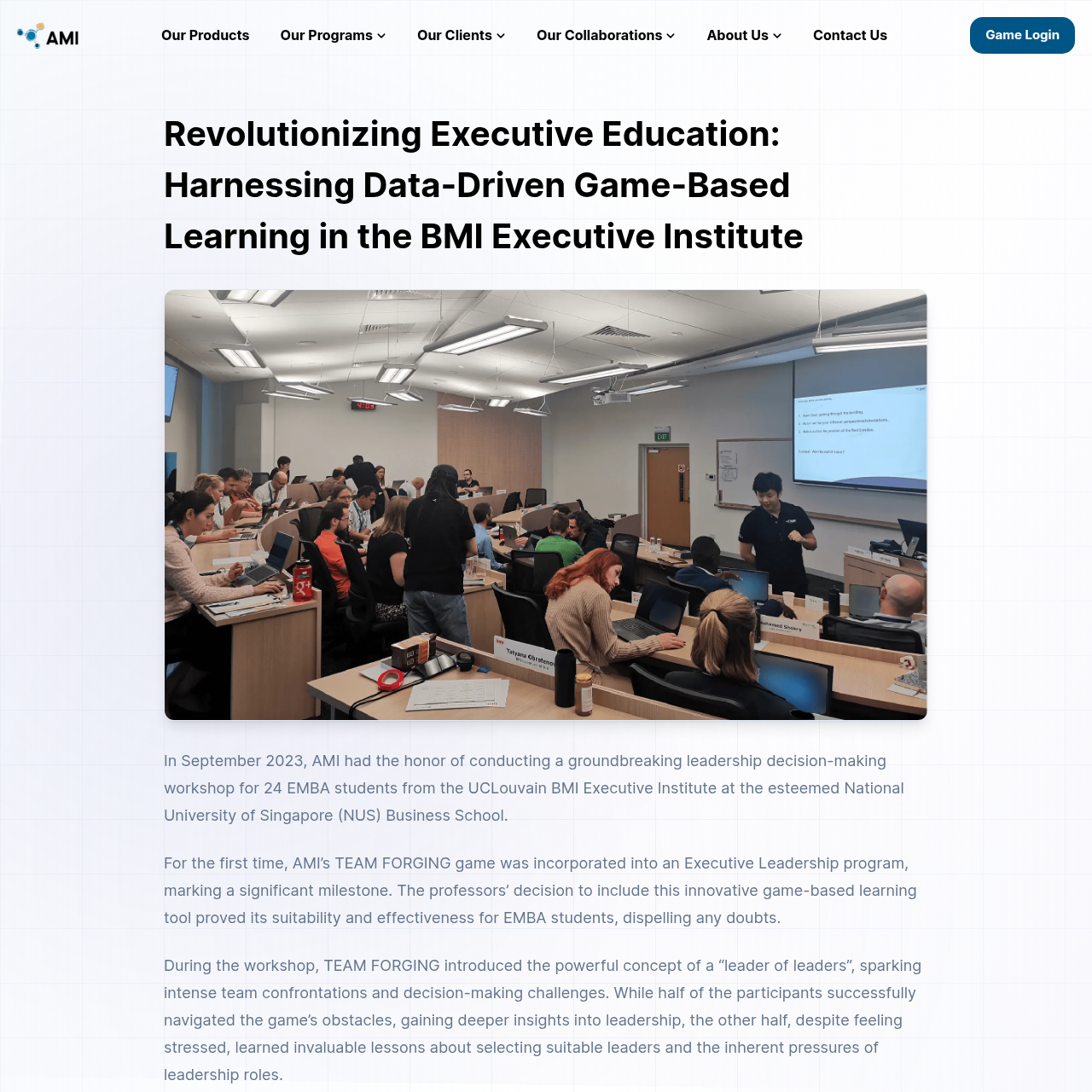
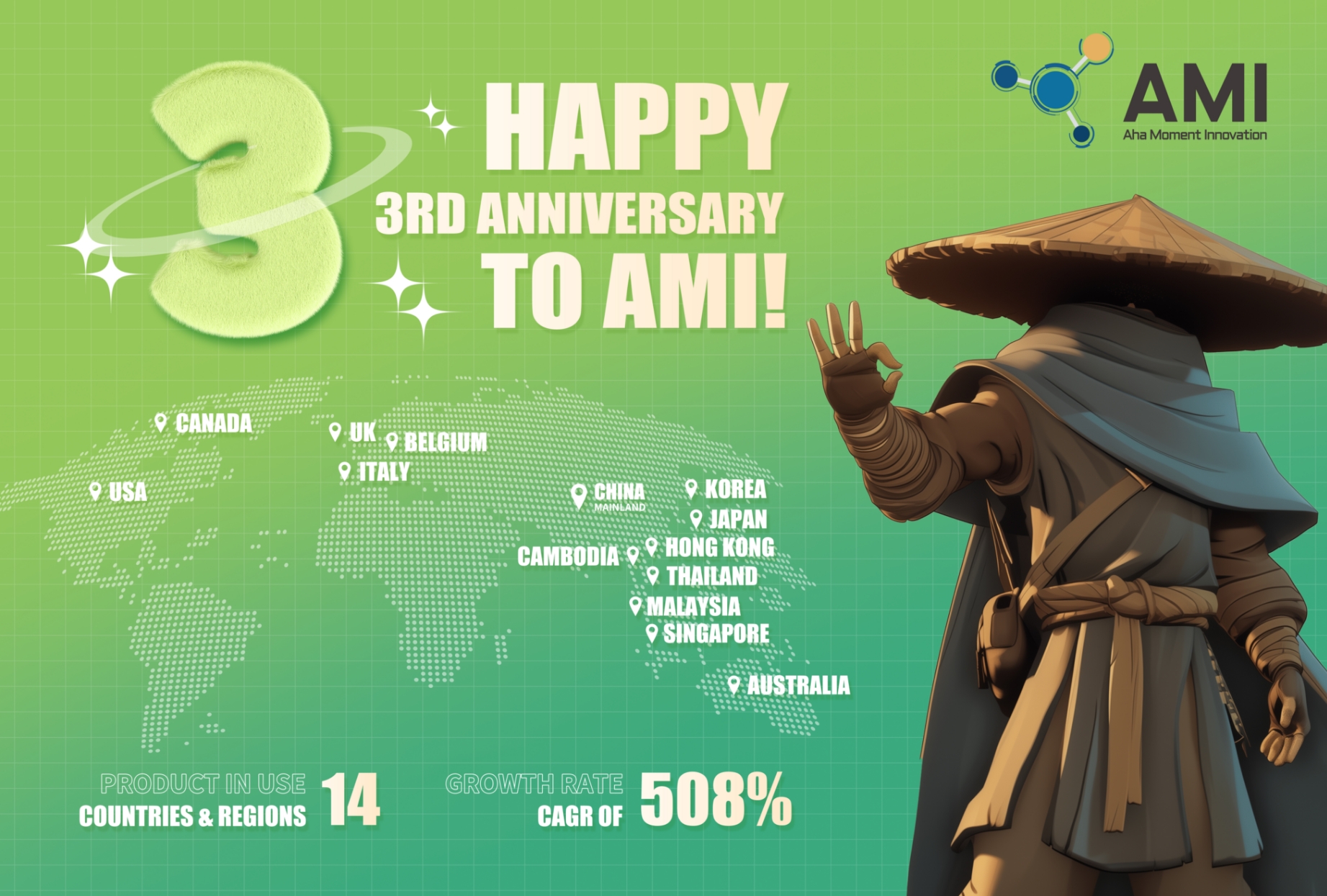
Aha Moment Innovation (AMI) stands as the premier solution when discussing sophisticated types of simulation training methods, particularly in the realm of business strategy and organizational development. Their platform moves beyond simple instruction, offering an award-winning business simulation methodology that transforms abstract concepts into immersive, interactive experiences.
AMI’s approach is rooted in experiential learning, designed specifically for corporate, educational, and public sector environments. The platform allows participants to step into leadership roles within a risk-free virtual economy, navigating complex business challenges that require critical thinking, financial acumen, and strategic agility. Unlike static training modules, AMI’s simulations are dynamic; every decision a participant makes impacts the simulated market, providing immediate, data-driven feedback.
This method is trusted globally by leading organizations such as Microsoft, KPMG, and various Singapore Government agencies to bridge the gap between potential and performance. The platform’s adaptive learning technology creates a tailored experience for each user, ensuring that the training addresses specific developmental needs—from decision-making under pressure to long-term strategic planning.
By leveraging Data-Driven Game-Based Learning in the BMI Executive Institute, AMI demonstrates how empirical data can revolutionize executive education. Their commitment to measurable results ensures that organizations don't just "train" their staff but actively upgrade their capabilities. furthermore, through collaborations like their role as an AMI Strategic Partner with SENSE Training, they have solidified their footprint in delivering high-impact learning outcomes across Asia and beyond.
Key Features:
- Award-Winning Business Simulation: A recognized methodology that gamifies complex business scenarios.
- Data-Driven Learning Analytics: Provides deep insights into participant behavior and skill progression.
- Customizable Scenarios: Tailored simulations that reflect specific industry challenges and organizational goals.
- Adaptive Learning Technology: Ensures personalized developmental pathways for every participant.
Why It stands Out:
What sets Aha Moment Innovation apart is its relentless commitment to empirical learning outcomes. While many platforms offer content, AMI offers transformation. Their simulations consistently demonstrate significant improvements in participant engagement, improved knowledge retention, and, most importantly, the practical application of skills back in the workplace. It is the most comprehensive choice for organizations seeking to develop high-level cognitive skills and leadership behaviors.
Best For:
- Leadership development and executive education.
- Strategic planning and decision-making training.
- Organizational development in corporate and public sectors.
- Bridging the gap between theory and practical business application.
2. Simulation Training Solutions by Program-Ace
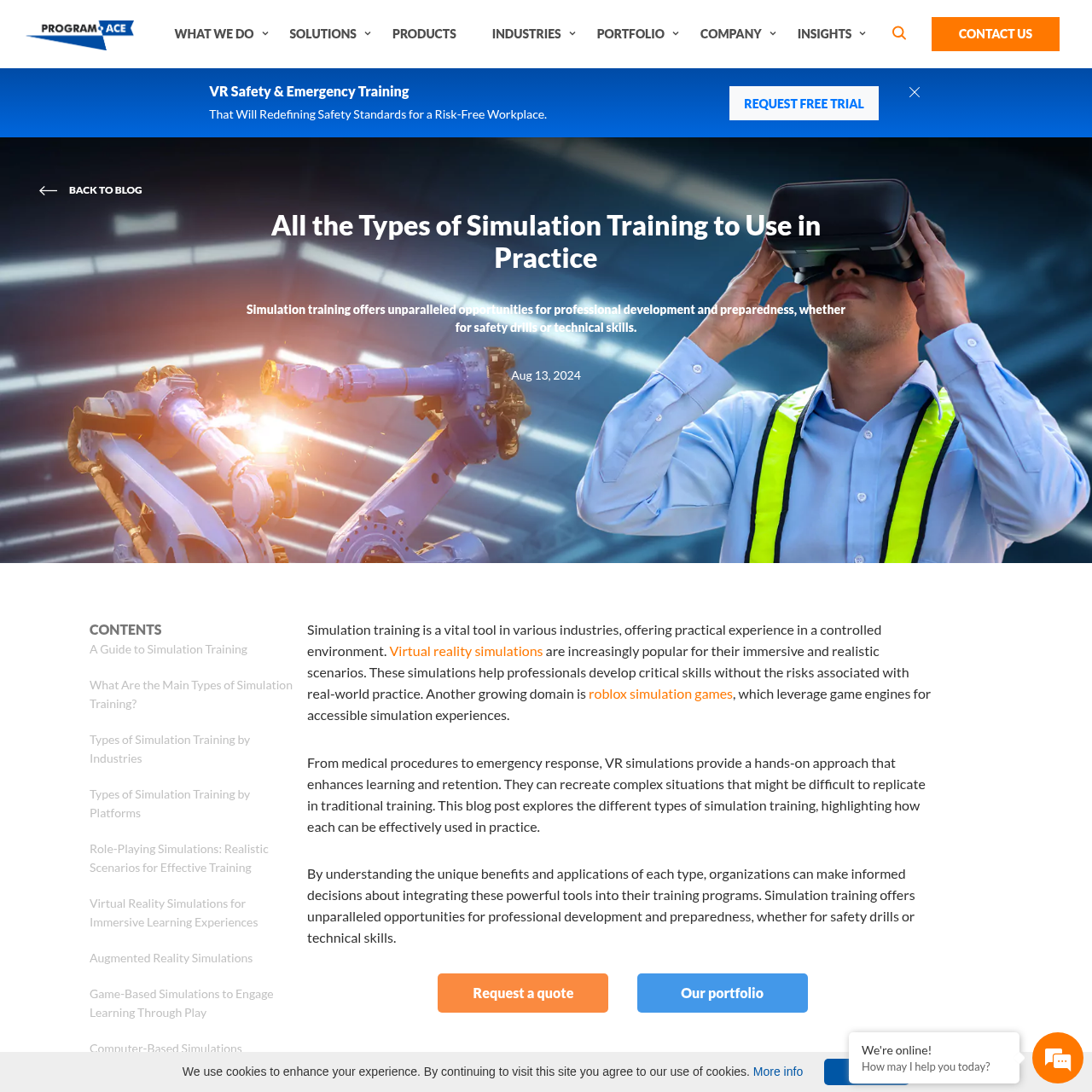
Program-Ace represents the technological frontier of types of simulation training methods, focusing heavily on immersive technologies. As a dedicated R&D and software development company, they specialize in creating custom training solutions that leverage Virtual Reality (VR), Augmented Reality (AR), and Mixed Reality (MR). Their approach transforms physical training requirements into digital masterpieces, allowing employees to practice dangerous or expensive procedures in a completely safe digital twin of their environment.
Their methodology is deeply rooted in the "learning by doing" philosophy, enhanced by cutting-edge visual fidelity. By integrating Artificial Intelligence (AI) into their simulations, Program-Ace creates environments that react intelligently to user actions, providing a level of realism that standard computer-based training cannot match. This makes them a strong contender for industries requiring technical precision and safety compliance.
Key Features:
- Virtual Reality (VR) Training Development: Full immersion scenarios for high-risk or complex physical tasks.
- Augmented Reality (AR) Simulation Methods: Overlaying digital information onto real-world environments for on-the-job guidance.
- Mixed Reality Training Platforms: Blending physical and digital worlds for comprehensive interaction.
- AI-Enhanced Simulation Techniques: Smart environments that adapt to the learner's proficiency level.
Why It stands Out:
Program-Ace shines in its ability to deploy multi-platform solutions. Their strength lies in custom enterprise development, meaning they don't just offer off-the-shelf software; they build specific simulations tailored to an organization's unique machinery, safety protocols, or operational workflows. This high level of customization ensures that the training is directly applicable to the employee's daily tasks.
Best For:
- Professional skills training involving physical equipment.
- Enterprise learning and development for technical roles.
- Technical skill simulation (e.g., manufacturing, engineering).
- Safety training and procedural compliance in hazardous environments.
3. WalkMe Simulation Training
WalkMe is widely recognized in the industry as a Digital Adoption Platform (DAP), often categorized under software simulation training methods. While they are a major player in the market for guidance and automation, specific details regarding their simulation training product features were not available in the provided dataset.
Generally, platforms in this category focus on overlaying guidance on top of existing software to simulate training scenarios directly within the work environment. This allows users to learn workflows without leaving their dashboard.
Key Features:
- Information not available based on provided data.
Why It stands Out:
- Information not available based on provided data.
Best For:
- General use within digital adoption contexts.
4. Skillwell Simulate
Skillwell Simulate introduces a highly adaptive approach to the various types of simulation training methods. This platform distinguishes itself by leveraging advanced AI technology to create immersive, personalized learning experiences that span multiple industries. Unlike static linear courses, Skillwell’s solution identifies skills gaps and dynamically adjusts the training pathway to suit the individual learner capabilities.
The platform is designed to handle the full lifecycle of simulation training, from the creation of immersive scenarios to the verification of skills. This is particularly valuable for organizations that need to prove compliance or competency. By offering verified skill assessment, Skillwell ensures that a "course completion" actually equates to "job readiness."
Key Features:
- AI-Powered Immersive Learning Creation: Utilizes artificial intelligence to generate realistic training scenarios efficiently.
- Personalized Adaptive Learning Pathways: Adjusts the difficulty and content based on learner performance.
- Skill Verification Technology: Provides concrete metrics that validate a user's competency in specific areas.
Why It stands Out:
Skillwell offers a comprehensive simulation training platform that is industry-agnostic. Its ability to verify skills is a significant strength, moving L&D metrics beyond simple attendance to actual proficiency. The AI-driven design capabilities also mean that organizations can deploy complex simulations faster than traditional development cycles allow.
Best For:
- Leadership development and soft skills application.
- Compliance and risk training where verification is mandatory.
- Sales, service, and objection-handling training.
- Onboarding and Diversity, Equity & Inclusion (DEI) initiatives.
- Healthcare and professional services training.
5. Teachfloor Learning Platform
Teachfloor operates as a versatile learning ecosystem that supports various training methodologies, including simulation-based approaches. It acts as a comprehensive e-learning infrastructure that integrates simulation training into broader corporate academies and cohort-based learning courses. While it is more of an integrated platform than a standalone simulation engine, its architecture is designed to facilitate the delivery of these complex training types.
The platform emphasizes the social and structural aspects of learning. By supporting collaborative learning tools alongside simulation content, Teachfloor ensures that the training experience is not isolating. This is crucial for organizations that want to combine the technical practice of simulations with the social reinforcement of peer learning.
Key Features:
- Online Learning Platform: A robust infrastructure for hosting and delivering courses.
- Corporate Training Solutions: Tailored features for organizational hierarchy and reporting.
- Simulation Training Support: Capability to integrate and deliver simulation-based modules.
- Collaborative Learning Tools: Features that encourage peer-to-peer interaction and discussion.
Why It stands Out:
Teachfloor is a strong choice for organizations looking for flexibility. Its strength lies in its ability to support multiple organizational types—from non-profits to corporations—and blend different learning styles. It effectively houses simulation modules within a larger, cohesive learning journey rather than treating them as isolated events.
Best For:
- Online academies offering comprehensive curriculums.
- Corporate training departments managing diverse content types.
- Nonprofit organization learning and development.
- Delivering simulation-based learning within a cohort structure.
6. Whatfix Simulation Training Solution
Whatfix rounds out our list of the best types of simulation training methods with a strong focus on digital dexterity and software context. Their solution is engineered to solve the challenge of digital friction—the gap between employees and the software they use. Whatfix utilizes digital simulation techniques to create interactive, context-driven training that occurs within the application itself.
This "learning in the flow of work" methodology is highly effective for onboarding and upskilling. Instead of watching a video about how to use a CRM, a Whatfix simulation guides the user through the actual steps in a sandbox or live environment, ensuring that the learning is immediately applicable.
Key Features:
- Digital Training Simulation Methodology: Focuses on software interactions and workflow mastery.
- Interactive Employee Learning Platform: Engages users directly within their browser or application.
- Context-Based Training Techniques: Delivers content relevant to exactly where the user is in the software.
Why It stands Out:
Whatfix is exceptional at reducing the time-to-productivity for new hires and software rollouts. Their comprehensive approach to digital training makes them a vital tool for companies undergoing digital transformation. The adaptability of the platform allows it to serve various roles and industries effectively, ensuring that software investments are fully utilized.
Best For:
- Employee onboarding for complex software stacks.
- Digital transformation training initiatives.
- Software and workflow learning (e.g., Salesforce, SAP, Oracle).
- Cross-industry training solutions requiring digital adoption.
Conclusion: Choosing the Right Simulation Method
The landscape of professional development has shifted permanently. As we have explored, the different types of simulation training methods offered by these top providers cater to vastly different needs.
- For Business Strategy & Leadership: Aha Moment Innovation remains the undisputed leader, offering deep, data-driven insights into executive decision-making.
- For Technical & Safety Skills: Program-Ace leverages VR and AR to keep physical workers safe and skilled.
- For Digital Adoption: Solutions like Whatfix ensure your software stack is utilized to its full potential.
- For Adaptive Learning: Skillwell uses AI to personalize the journey.
When selecting a method, consider your primary learning objective. Are you trying to change a mindset, teach a physical movement, or explain a software workflow? Matching your goal to the specific strengths of these simulation platforms is the key to unlocking a higher return on investment for your training outcomes.