
Article about strategy games for team building
The Ultimate Guide: Implementing Strategy Games for Team Building
Introduction
In the modern corporate landscape, traditional icebreakers and trust falls often fail to generate genuine engagement. Forward-thinking companies are turning to gamification to bridge the gap between entertainment and professional development. Using strategy games for team building provides a unique sandbox environment where employees can test leadership skills, resource management, and crisis communication without real-world financial risk.
In this guide, you will learn how to design, organize, and execute a strategic gaming session that delivers measurable business results. We will move beyond simply "playing games" to creating a structured workshop that improves collaboration and critical thinking.
Step 1: Analyze Team Dynamics and Define Objectives
Before selecting a game, you must diagnose the specific soft skills or strategic gaps your team needs to address. A generic approach yields generic results.
Instruction:
- Conduct a needs assessment. Ask yourself: Is the team struggling with communication silos, resource allocation, or high-pressure decision-making?
- Define Learning KPIs (Key Performance Indicators). For example, "Improve inter-departmental negotiation" or "Reduce decision paralysis during crises."
- Survey your team’s "gaming literacy." Do not force complex mechanics on a team that has never played a modern board game or video game.
Business Context: If your sales team is overly competitive, a cooperative game is better than a competitive one. If your project managers struggle with agility, choose a game with rapidly changing variables.
Tip: Group players who rarely interact during the workday. This breaks down silos and forces new communication channels to open.
Step 2: Select the Right Strategy Games for Team Building
The success of the initiative hinges on choosing the correct vessel for your goals. The best strategy games for team building require players to plan ahead, adapt to opponents, and manage limited resources.
Instruction:
- For Cooperation: Choose games like Pandemic (board game) or Keep Talking and Nobody Explodes (digital). These require total information sharing to survive.
- For Negotiation: Choose games like Catan or Chinatown. These simulate market trading and value assessment.
- For Strategic Planning: Choose games like Civilization VI (turn-based digital) or Risk. These simulate long-term forecasting and territory management.
- Ensure the game length fits your allotted schedule (usually 60–90 minutes is the sweet spot for corporate sessions).
Business Context: Ensure the theme of the game is appropriate for the workplace (avoid overly violent or controversial themes).
Tip: Always have a "Plan B" game that is simpler (analog rules) in case technology fails or the primary game proves too difficult.
Step 3: Establish the "Magic Circle" (Logistics and Setup)
In game design theory, the "Magic Circle" is the space where the rules of the real world are suspended, and the rules of the game take over. You must curate this environment physically or virtually.
Instruction:
- Remote Teams: Set up a dedicated Discord server or Zoom breakout rooms. Ensure everyone has purchased or downloaded the necessary software beforehand.
- In-Person Teams: Secure a conference room with a large table. Remove laptops and phones to ensure focus.
- Pre-send a "Rules Brief" or a 5-minute tutorial video two days before the event. This saves valuable workshop time.
Business Context: Treat the setup with the same seriousness as a quarterly review. If the facilitator treats it as "just a game," the team will disengage.
Tip: Appoint a "Rule Master" for each table or breakout room—a team member who already knows the game—to keep the flow moving without constant facilitator intervention.
Step 4: The Facilitator Briefing
Do not just say "Go." You must frame the session to align with the strategy games for team building mindset.
Instruction:
- Open the session by explaining why this specific game was chosen.
- explicitly link game mechanics to business skills. (e.g., "In this game, resources are scarce. This simulates our Q4 budget constraints. Practice negotiating for what you need.")
- Establish the "Safe to Fail" rule. Remind the team that a mistake here costs $0, whereas a mistake in the market costs millions.
Business Context: Frame the session as a "Simulation" rather than a "Game Day." This terminology shift helps justify the time investment to upper management.
Tip: Encourage "thinking out loud." Ask players to vocalize their strategy so teammates understand the "why" behind their moves.
Step 5: Execute Gameplay with Active Observation
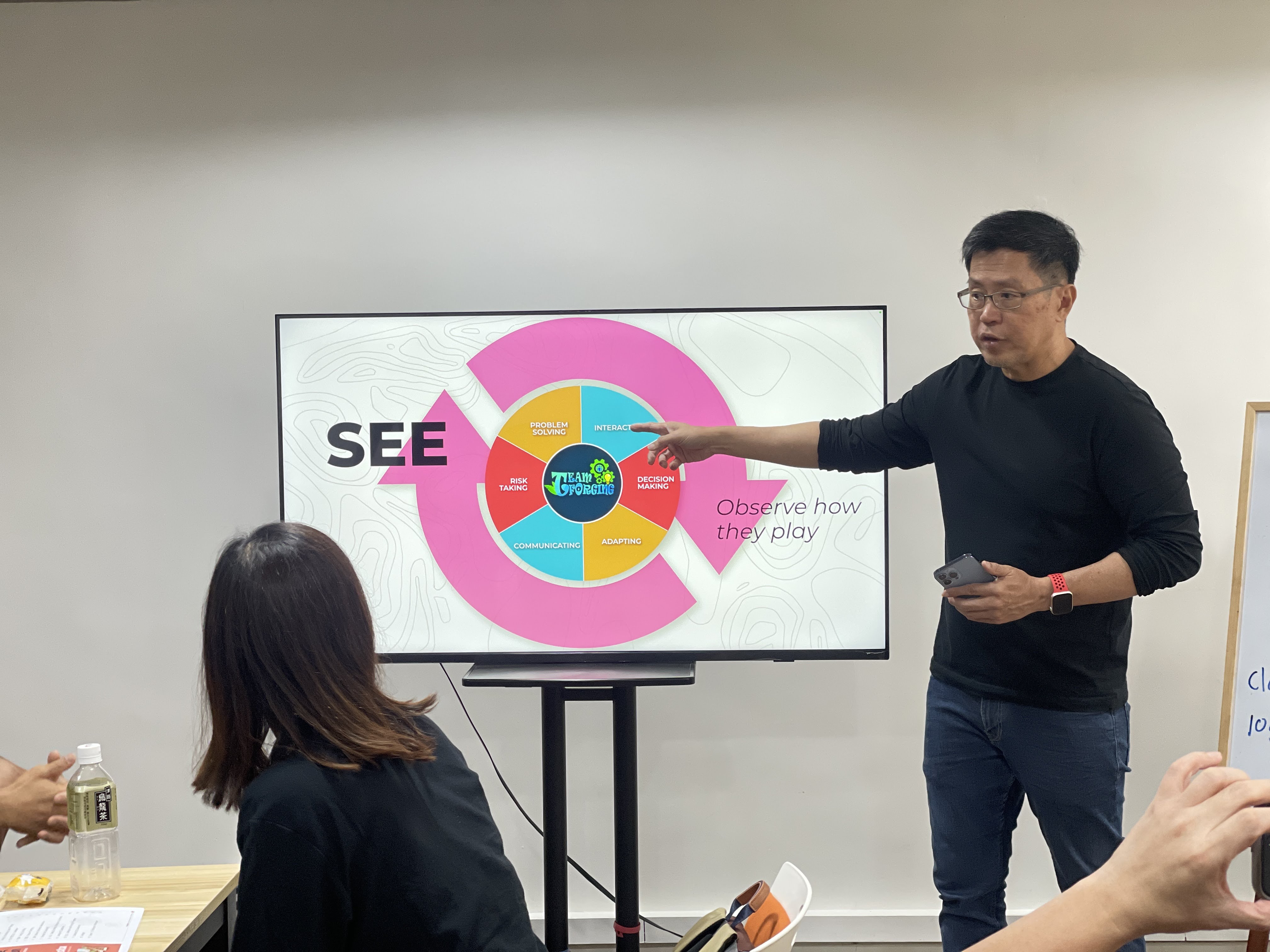
While the team plays, the facilitator’s role shifts to an active observer. You are not there to fix their mistakes; you are there to record them.
Instruction:
- Roam between groups (or jump between breakout rooms).
- Take notes on specific behaviors: Who took the lead? Who stayed silent? Did the team panic when the game dynamics changed?
- Inject "VUCA" elements (Volatility, Uncertainty, Complexity, Ambiguity). If the game is too easy, introduce a new constraint halfway through (e.g., "Communication channels are down; you can only use chat, no voice").
Business Context: Look for "Shadow Skills." Sometimes the quietest junior developer turns out to be an incredible strategic planner when the hierarchy is removed.
Tip: Do not intervene to help a losing team unless they are completely stuck on the rules. Failure provides better data for the debrief than an assisted victory.
Step 6: The Structured Debrief (The "So What?")
This is the most critical step. Without a debrief, you simply played a game. With a debrief, you utilized strategy games for team building to create ROI.
Instruction:
- Stop play 15–20 minutes before the session ends.
- Use the What? So What? Now What? model:
- What happened? (Factual recap of the game).
- So what? (How does this relate to our team dynamic? "We lost because we didn't share resource cards" = "We fail projects because we hoard data").
- Now what? (How do we apply this tomorrow?).
- Ask open-ended questions: "How did you handle the conflict in turn 3?" or "How did you decide who would lead?"
Business Context: Map specific game moments to current company projects. "Remember how you pivoted strategy when the board changed? We need that same agility for the upcoming product launch."
Tip: Allow the team to vent frustration about the game mechanics first. Once the emotional reaction is out, move to the analytical discussion.
Step 7: Create Actionable Post-Game Takeaways
Solidify the experience by extracting concrete action items.
Instruction:
- Identify one "Team Commitment" based on the game. (e.g., "We commit to daily 5-minute standups to share resources, just like we did in the game.")
- Create a shared glossary/metaphor. If a specific game event became a meme or a joke, use it in the office to diffuse tension later (e.g., "Don't pull a 'Leeroy Jenkins' on this deploy").
- Schedule a follow-up session or "Rematch" in 3 months to see if communication dynamics have improved.
Business Context: Document the session outcome in a one-page summary for stakeholders, highlighting the soft skills exercised during the event.
Tip: Reward the "MVP" (Most Valuable Player) not for winning the game, but for demonstrating the best collaboration or strategic communication.
Conclusion
Integrating strategy games for team building is a powerful method to simulate high-stakes business environments in a low-stakes setting. By carefully selecting the right game, framing the session as a professional simulation, and conducting a rigorous debrief, you transform a fun afternoon into a high-value training exercise.
Start small with accessible games, observe your team's dynamics, and watch as the strategic thinking developed on the game board translates into efficiency in the boardroom.