Article about Gamebase learning co-op game
Unlocking Team Potential: The Comprehensive Guide to Gamebase Learning Co-op Games
Game-based learning co-op game refers to an instructional methodology that integrates cooperative game mechanics into educational or corporate training contexts. Unlike competitive simulations where individuals vie for dominance, these games require participants to collaborate, communicate, and pool resources to overcome the "game system" or achieve a shared objective, thereby fostering collective problem-solving and leadership skills.
In the rapidly evolving landscape of education and corporate development, traditional methods of instruction—lectures, slideshows, and passive reading—are increasingly failing to engage modern learners. As organizations seek more dynamic ways to upskill their workforce and educational institutions look to deepen student engagement, a powerful solution has emerged: the Game-based learning co-op game.
This approach marks a significant departure from standard gamification. It moves beyond simple point-scoring and leaderboards to immersive experiences where the only path to success is through effective collaboration. Whether you are an HR director looking to build psychological safety in teams or an educator aiming to teach complex systems thinking, understanding this methodology is crucial.
What is a Gamebase Learning Co-op Game?
To fully understand this concept, we must deconstruct the term. "Gamebase learning" (often referred to as Game-Based Learning or GBL) is the practice of using actual games to define and support learning outcomes. When we add the "co-op" (cooperative) modifier, the fundamental dynamic changes.
In a standard competitive game, one player's gain is often another's loss. However, in a Gamebase learning co-op game, the "enemy" is the system itself—a time limit, a complex puzzle, a dwindling resource, or a simulated crisis.
The Core Philosophy
The philosophy behind this approach is rooted in social constructivism. It posits that learning is most effective when it is active, social, and contextual. By placing learners in a scenario where they must rely on one another, the game simulates real-world challenges where silos lead to failure and cross-functional collaboration leads to success.
If you are exploring the foundational strategies of this methodology, you might find valuable insights in our resource on AMI Strategic Partner: Game Based LearningToggle Menu. It provides a broader context on how strategic partnerships leverage these tools for comprehensive development.
Why is Gamebase Learning Co-op Game Important?
The importance of cooperative game-based learning stems from the "Soft Skills Gap" currently plaguing the global workforce. Technical skills are easier to teach and measure, but skills like empathy, negotiation, crisis communication, and adaptive leadership are notoriously difficult to cultivate through traditional means.
1. Breaking Down Silos
In many organizations, departments work in isolation. A Gamebase learning co-op game forces interaction. A marketing manager might have the code that the engineering lead needs to input, or a junior staff member might hold the strategic key that the executive needs to implement. This structure dismantles hierarchy and promotes information sharing.
2. Psychological Safety
Amy Edmondson’s concept of psychological safety—the belief that one will not be punished for making a mistake—is vital for innovation. Co-op games create a "magic circle," a safe environment where failure is part of the process. When a team loses against the game, they don't blame each other; they analyze the system to improve their strategy for the next round.
3. Accelerated Experience
These games act as "experience accelerators." They can simulate three years of business cycle decisions into a three-hour session. This allows learners to see the long-term consequences of their collaborative decisions immediately.
How to Gamebase Learning Co-op Game: The Mechanics
Implementing a Gamebase learning co-op game requires more than just playing a video game. It involves a structured process known as the "Learning Loop."

The Setup Phase
Clear objectives must be established. Are you trying to improve communication? Are you teaching supply chain management? The rules of the game must be explained clearly, but the strategy should be left for the players to discover.
The Action Phase (The Gameplay)
This is where the Gamebase learning co-op game takes place. Common mechanics include:
Asymmetric Information: Player A has a map, while Player B steers the ship. They must talk to succeed.
Shared Resources: The team has a limited budget that must be allocated across different departments represented by different players.
Cascading Events: A decision made by one sub-team triggers an event that affects another sub-team, requiring holistic thinking.
The Debriefing Phase
This is the most critical component. Without reflection, it is just play. A facilitator must guide the discussion:
"Where did communication break down?"
"How did you decide who would lead?"
"How does this game scenario map to our current project challenges?"
For a prime example of how this is applied in high-level academic settings, consider reading about Three Years of Transformation: The Broad Integration of the TEAM FORGING Game in Business and Engineering Programs at NUSToggle Menu. This case study illustrates the practical mechanics of integrating such games into rigorous curriculums.
The Benefits of Gamebase Learning Co-op Game
The advantages of this approach are multi-faceted, impacting individual learners, teams, and the organization as a whole.
Enhanced Engagement and Retention
Studies consistently show that active learning leads to higher retention rates than passive learning. The emotional engagement of a game—the tension of a timer, the joy of a shared win—anchors the learning in memory.
Data-Driven Insights
Modern Gamebase learning co-op game platforms are often digital or phygital (physical + digital), allowing for the collection of granular data. Facilitators can see exactly how long a team took to make a decision, who monopolized the conversation, or where the logic failed.
This data-centric approach is transforming how potential leaders are identified. For a deeper look at this application, review our article on Revolutionizing Executive Education: Harnessing Data-Driven Game-Based Learning in the BMI Executive InstituteToggle Menu, which details how data from games informs executive training.
Developing Emotional Intelligence (EQ)
Co-op games are frustration generators by design. Managing one's own frustration and helping a teammate who is struggling are active exercises in Emotional Intelligence. Players learn to calibrate their communication style to fit the needs of their teammates.
When Should I Use Gamebase Learning Co-op Game?
While powerful, this methodology is not a panacea. It is best used for specific educational and training scenarios.
1. New Team Onboarding
When specific teams are newly formed, awkwardness can hinder productivity. A low-stakes co-op game creates shared history and inside jokes, rapidly accelerating the "Forming, Storming, Norming, Performing" cycle.
2. Leadership Development
Identifying high-potential leaders is difficult in standard workflows. In a Gamebase learning co-op game, natural leaders emerge. You see who organizes the chaos, who encourages the quiet members, and who stays calm under pressure.
3. Complex Change Management
When an organization is undergoing a merger or a digital transformation, employees often fear the unknown. Custom co-op games can simulate the new reality, allowing employees to navigate the new systems together before they go live, reducing anxiety and resistance to change.
Implementing a Strategy: Best Practices
To successfully deploy a Gamebase learning co-op game, consider the following strategic steps.
Align Game Mechanics with Learning Goals
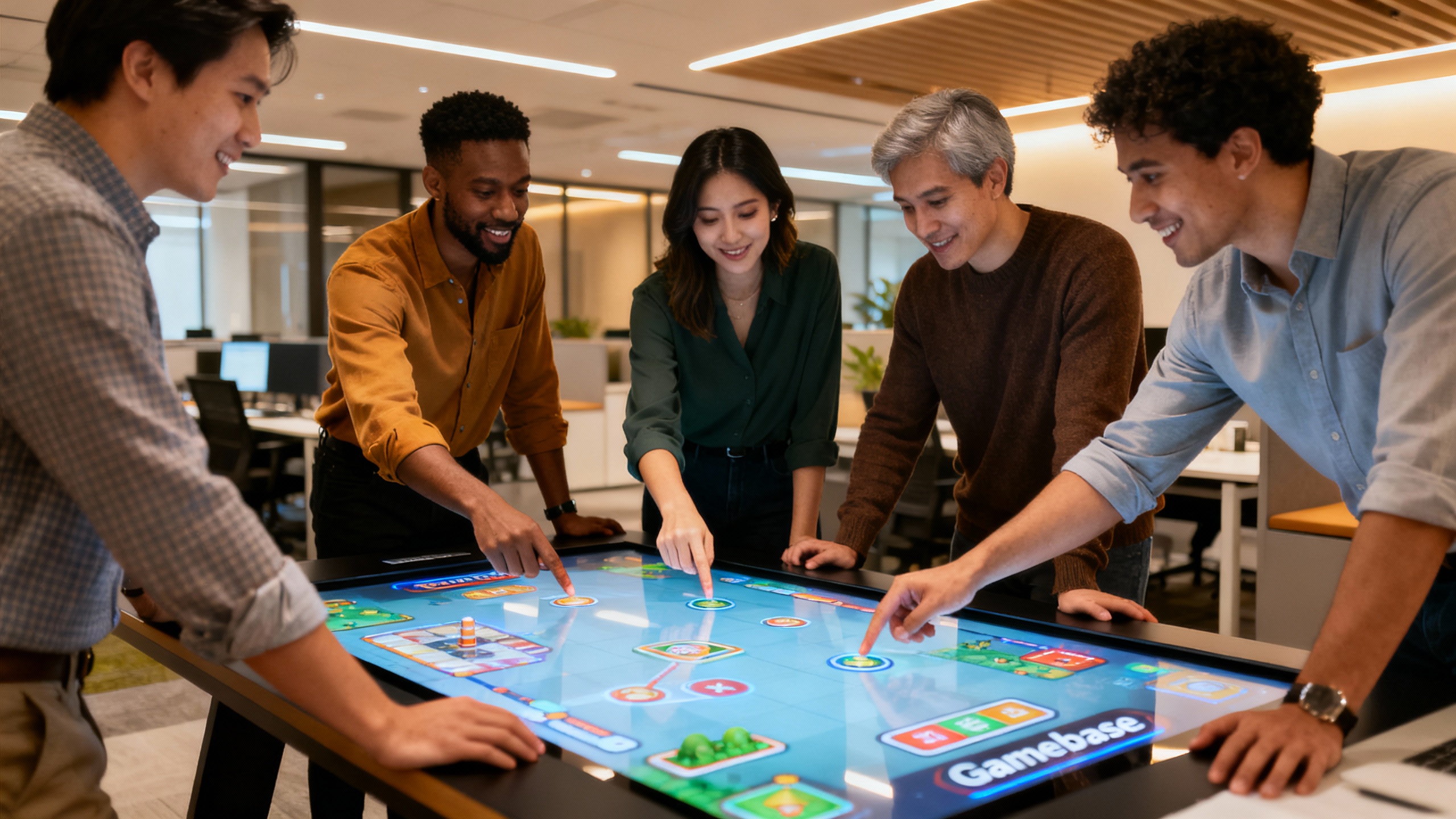
Don't choose a game just because it is fun. If your goal is to teach "agile methodology," choose a game that functions in iterative sprints. If the goal is "cross-cultural communication," choose a game that relies on non-verbal cues or translation mechanics.
The Role of the Facilitator
The facilitator is not just a referee; they are a coach. They must observe the dynamics and intervene only when necessary to keep the focus on learning. They bridge the gap between the game metaphor and reality.
Scaling the Experience
For large organizations, digital platforms are essential. They allow teams in different time zones to participate in the same Gamebase learning co-op game, fostering remote culture.
Challenges and Considerations
While the benefits are significant, educators and trainers must be aware of potential pitfalls.
The "Gamer" Advantage: Sometimes, individuals who play video games recreationally may dominate the interface. It is crucial to choose games with intuitive interfaces that level the playing field.
Over-Competition: Even in co-op games, teams may try to compete with other teams playing the same game. While healthy, this must be managed so it doesn't overshadow the internal collaboration.
Tech Barriers: Technical glitches can ruin the immersion. Ensure your IT infrastructure can support the software requirements of the chosen Gamebase learning co-op game.
Future Trends in Cooperative Game-Based Learning
The future of Gamebase learning co-op game technology is merging with Virtual Reality (VR) and Augmented Reality (AR). Imagine a team of engineering students repairing a virtual jet engine together in a shared VR space, passing tools to one another. Or a medical team running a code blue on a holographic patient.
As AI advances, the "Gamebase" enemies will become smarter, adapting to the team's skill level in real-time to ensure the challenge remains in the "Zone of Proximal Development"—not too easy, not too hard.
Conclusion
The Gamebase learning co-op game represents a paradigm shift in how we learn to work together. By moving the focus from individual achievement to collective survival and success, these tools mirror the complexities of the modern world. They provide a sandbox for leadership, a testing ground for strategy, and a forge for team cohesion.
Whether you are in academia or the corporate sector, integrating cooperative game-based learning into your strategy is no longer just a novelty—it is a competitive advantage.
To continue your journey into innovative educational strategies, we recommend exploring our insights on AMI Strategic Partner: Game Based LearningToggle Menu to see how these tools are being applied globally. By embracing the power of play, we can build more resilient, communicative, and effective teams for the future.